
BLOG
Buttonwoods Blog
Revisit your favorite history posts and Collections Spotlights as featured on the museum’s social media channels.
BLACK HISTORY MONTH
COLLECTIONS SPOTLIGHT
FEBRUARY 26, 2021
Slavery in Massachusetts: The First Documented Arrival of Enslaved Africans
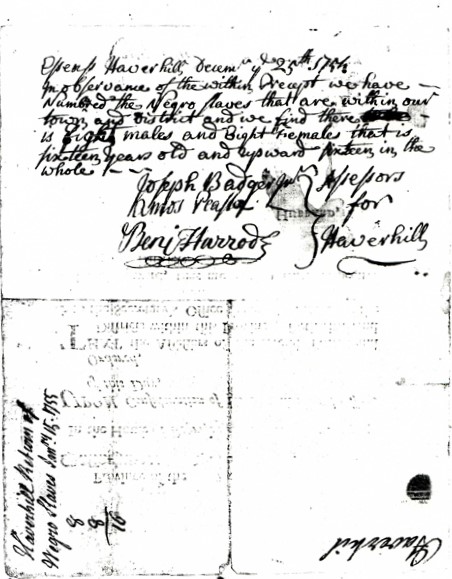
383 years ago today — February 26, 1638 — was the first documented arrival of enslaved Africans in Massachusetts.
Seven months prior, the ship Desire had sailed to the West Indies, carrying Native people taken captive during the Pequot War (1636–38) who were to be sold as slaves. On its return, the ship carried cotton, tobacco, and enslaved Africans.
We do not know when the first enslaved African arrived in Haverhill, but sources indicate the presence of enslaved Natives and Africans in Haverhill in the late-17th and early-18th centuries.
By the mid-18th century, slavery was practiced throughout Massachusetts. In 1754, the colony conducted a slave census. Haverhill’s response documents the enslavement of eight women and eight men “of sixteen years old and upward” — sixteen in total, rising to twenty-five by 1764.
In 1783, the Massachusetts Supreme Court determined that slavery was unconstitutional in the Commonwealth, signaling the end of slavery in Massachusetts.
LEARN MORE
Mass Moments: First Slaves Arrive in Massachusetts
Boston African American National Historic Site — The Middle Passage
BLACK HISTORY MONTH
COLLECTIONS SPOTLIGHT
FEBRUARY 20, 2021
Frances Cole Lee, Poet
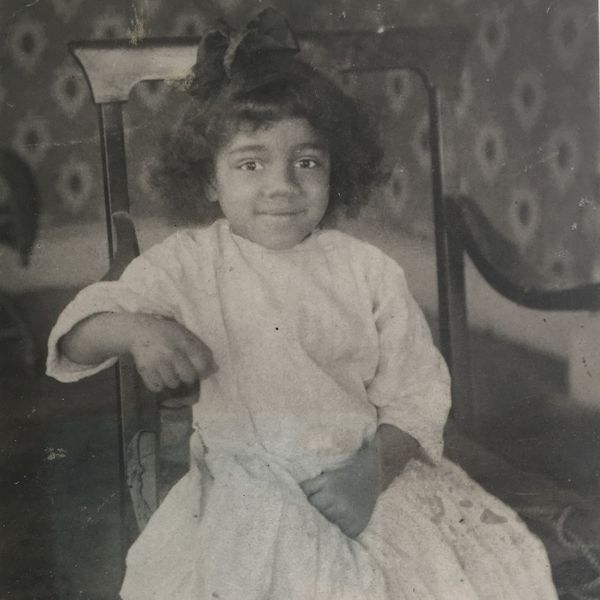
Frances Cole Lee (1884–1970) was an accomplished poet who wrote and published hundreds of poems over the course of her life. She was born in Haverhill and attended Haverhill High, where she met her husband, Joseph Lee Jr. They were married for over 50 years, until his death in 1955.
Lee had a natural talent for poetry, writing rhymes for her children when they were young, and she developed this skill through rigorously studying books of and about poetry at the Haverhill Public Library. Later in life, she counted fellow Haverhillite John Greenleaf Whittier among her favorite poets.
Lee first published a poem in the Christian Endeavor magazine, and she would go on to publish over 300 more, mostly in newspapers. In 1939, her poem “For Love of Life” was accepted for the poetry building at the World’s Fair. Two books collecting her poems — Faith of our Fathers (1938) and Opal Dust (1944) — can be found in Haverhill Public Library’s Special Collections.
Starting during World War II, Lee also put her pen to writing letters condemning racial segregation. She observed: “The Negro, brought here in chains… who has fought in every war and died for this country, still is treated like a second-class citizen… The time is going to come when this country will have to recognize the Negro, and give him his rightful place.”
Image: Frances Cole Lee, age 4, circa 1888. Buttonwoods Museum Collection.
BLACK HISTORY MONTH
COLLECTIONS SPOTLIGHT
February 11, 2021
Jan Ernst Matzeliger, Inventor
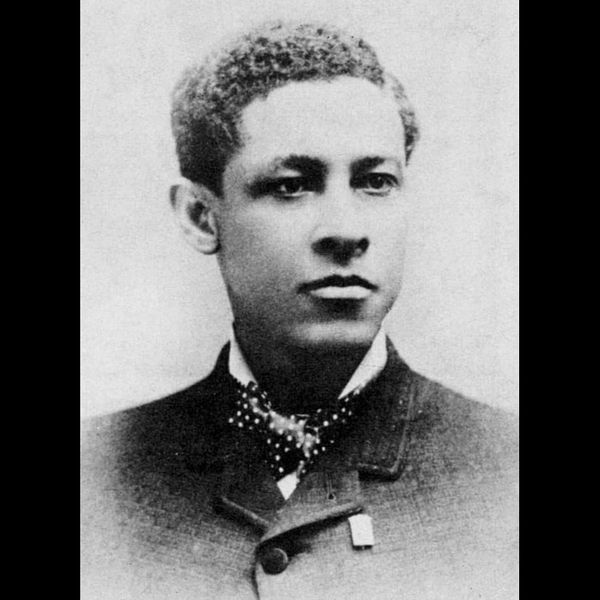
Jan Ernst Matzeliger (1852–1889) was born in Dutch Guiana (Suriname) and immigrated to the United States at age 20. He eventually settled in Lynn, MA, and like many immigrant arrivals to Massachusetts’s gateway cities, began working in a shoe factory.
By the late 1800s, machines had already transformed much of shoe production — but lasting (stretching the upper leather around a mold and attaching it to the sole) still had to be done by hand. Matzeliger observed skilled hand lasters at work, consulted reference books, and built his first prototype out of cigar boxes, elastic, and wire.
In 1883, after six years of development, Matzeliger applied for a patent. According to the National Inventors Hall of Fame, “Matzeliger’s device was so complex that patent examiners had to see it in operation to understand it.” His machine would eventually increase production to up to 700 shoes per day.
Matzeliger’s Lasting Machine was soon widely adopted — including in the shoe factories of Haverhill, which grew to become the third largest producer of shoes in the country. The vast majority of modern shoes today are still made using lasting machines based on his design.
BLACK HISTORY MONTH
February 5, 2021
The Pendleton Brothers, HHS Track Stars
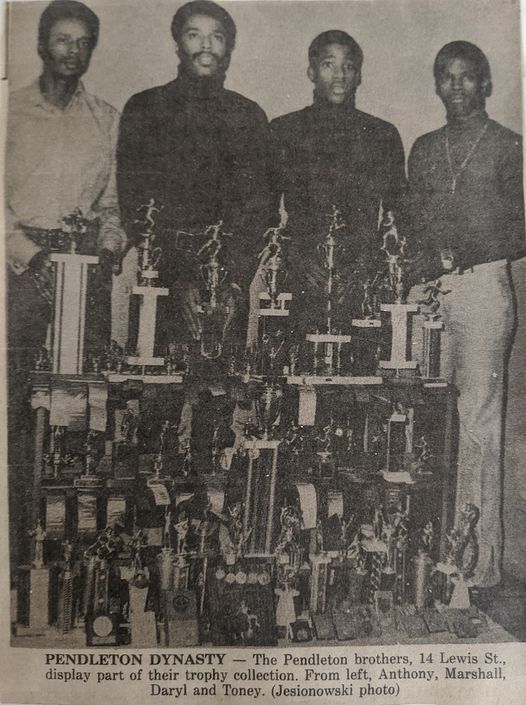
The Pendleton brothers — Anthony, Marshall, Daryl, and Toney — are likely the most accomplished track & field family to walk the halls of Haverhill High. In the late 1960s and early 1970s, the brothers took home multiple state titles:
🏃 1969: Anthony — State 100-yard dash
🏃 1971: Marshall — State 100-yard dash (the first Hillie to run it in under 10 seconds)
🏃 1973: Toney — State 100-yard dash AND long jump (the first Hillie to win two state titles in one season)
By the time this photo was taken around 1973, they had collected over 75 trophies, including HHS’s prestigious Paul Wilner Prize — awarded to the graduating senior who contributed most to the school’s athletic reputation — which Toney had recently received.
Daryl blazed his own trail as well: as an 8th-grader, he became the first Black child to receive the Boy of the Year award from the Haverhill Boys’ Club (now Boys & Girls Club of Greater Haverhill) in 1971.
BLACK HISTORY MONTH
February 3, 2021
Joseph H. Lee Jr., HHS Star Athlete
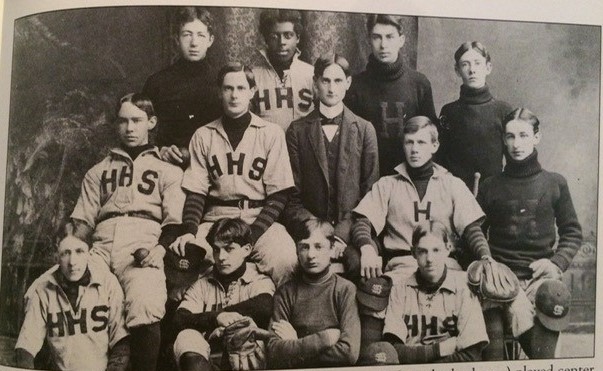
Joseph H. Lee Jr. was a three-season athlete at Haverhill High, competing in football, baseball, and track & field. He is considered “one of the most outstanding athletes in Haverhill’s history” and was one of the earliest members admitted into the Haverhill Sports Hall of Fame.
Born in Matthews County, Virginia, Lee moved to Haverhill as a child and entered Haverhill High in 1897. That fall he joined the football team — in an era before the forward pass, when all players played both offense and defense. He became known for his ability to move the ball, scoring 126 points for HHS including 22 touchdowns.
In March 1899, the track & field coach wrote a song to cheer on Lee at an interscholastic meet — to be sung to the tune of “Just One Girl”: “Now watch and see Joe Lee get ready… He’s a man who is cool and is steady… Now what is the matter with Joseph? Now, don’t you know, he’s all right!”
Lee graduated Haverhill High in 1902 and was offered a scholarship to Dartmouth, but turned it down to marry his high school sweetheart, Frances Cole. They were married for over 50 years. He died on November 22, 1955, at the age of 72.
BRADFORD COLLEGE SERIES
COLLECTIONS SPOTLIGHT
November 13, 2020
The Closing of Bradford College
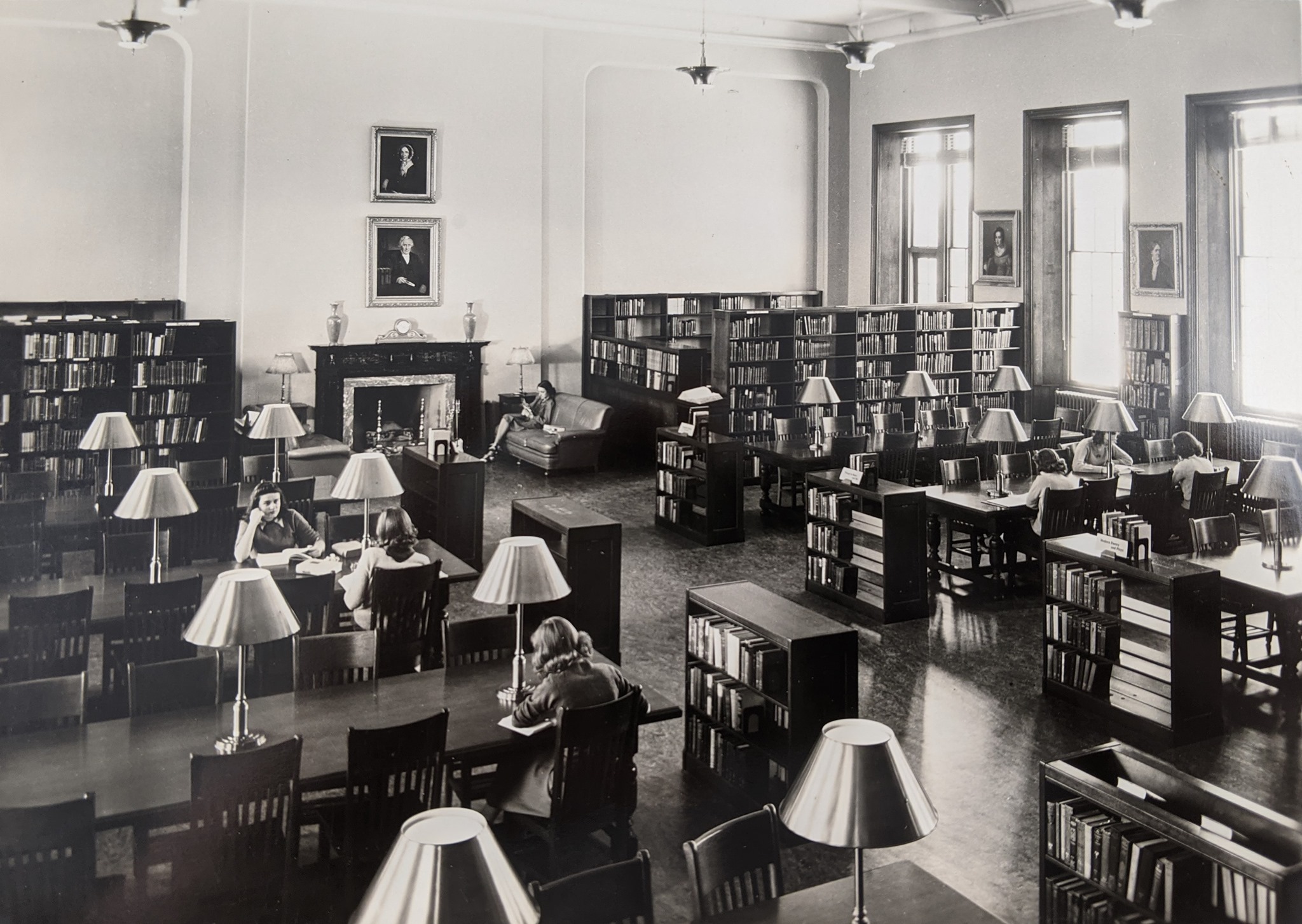
In 2000, after 197 years of educating young people, Bradford College shut its doors. A small school that had evolved from a preparatory academy to a women’s junior college to a co-ed liberal arts institution, it had ultimately succumbed to an inability to cover operating costs.
Bradford had prioritized a low student-to-faculty ratio, catered to international students and students with disabilities, and avoided high tuition costs that would put students in debt.
“It’s a tragedy when small colleges are forced to give way to mega-universities who only know a student by their social security number.” — Arthur Levine, former president of Bradford College
Though not a large institution, Bradford had over 6,000 alumni. The buildings on campus were eventually sold to Northpoint Bible College, who owns them today. While Bradford College no longer exists in institutional form, its history can be found in records, photographs, and portraits preserved at the Haverhill Public Library Special Collections and the Buttonwoods Museum.
This post concludes the Bradford College series written by Digital Content Intern Rachelle Doane.
 Buttonwoods Museum