
ON THE GROUNDS
Historic Properties
The Buttonwoods Museum campus is home to several historic structures spanning centuries of Greater Haverhill’s story
Duncan House
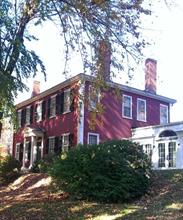
The Duncan House, known as “The Buttonwoods”, is a good example of a Federal style house built by prosperous merchants in the early 1800’s. This house was built in 1814 by James Duncan, a Haverhill merchant, as a wedding present for his son, Samuel White Duncan and his wife Mary.
Samuel White Duncan and his father and grandfather, both named James, were merchants who had family ties to southern New Hampshire. The Duncans owned Haverhill-built ships, warehouses, a distillery, and general stores. The Duncan family traded goods from England, the West Indies, and southern New Hampshire.
Mary Duncan Harris gave “The Buttonwoods” to the Haverhill Historical Society in 1903 and the Museum opened in 1904
John Ward House
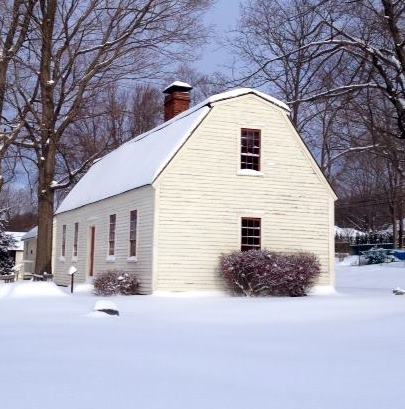
Reverend John Ward was the first minister of Haverhill. He built this house for one of his daughters. It was later lived in by tenant farmers who farmed Rev. John Ward’s fields.
The older part of the house that contains the kitchen was built between 1710 and 1720. The other half, the parlor, was built in the early 1820s.
Today, the Buttonwoods Museum uses the John Ward House to teach early American life to our many school children, scouts, and summer program visitors. The house is now furnished with reproduction tin ware, cookware, redware, barrels, and textiles.
One step through the door and you will feel like you have been transported back in time to experience what life was like in the 1700s.
Daniel Hunkins Shoe Shop
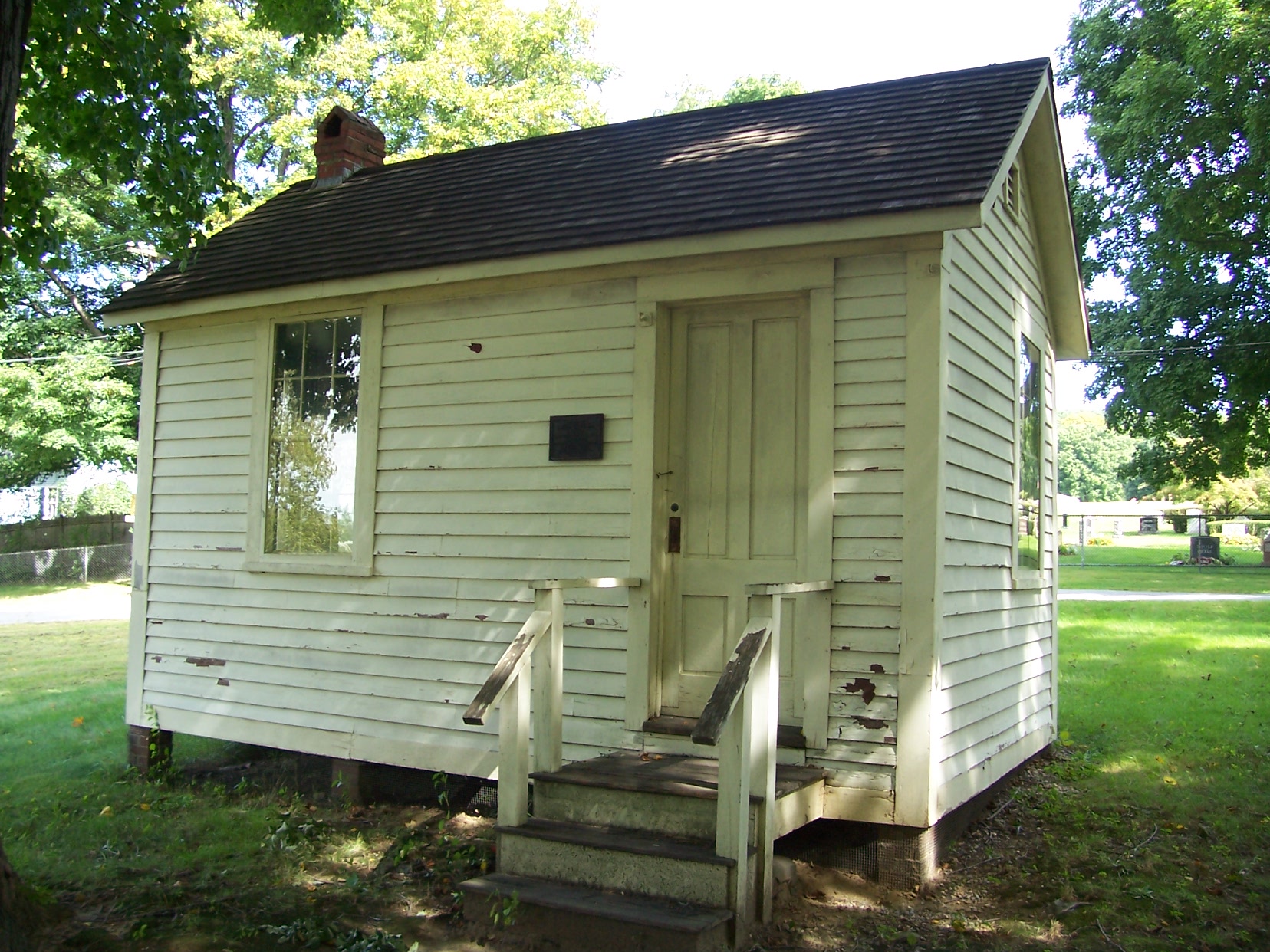
This shoe shop was built in 1859 by shoemaker and farmer Daniel A. Hunkins, who came to Haverhill from southern NH to work in the shoe industry. This style shop is called a “10-Footer” because most were built to the dimensions of 10 feet by 10 feet.
Shoe making remained a cottage industry in Haverhill until the mid-1800s. Shoe shops similar to this one dotted the countryside of Haverhill, Bradford, and the rest of Essex County.
With the invention of stitching and sewing machines, more shoes were produced in factories. This coincided with the influx of large numbers of Irish, Italians, Eastern Europeans and other immigrant groups.
Haverhill was the third largest producer of shoes in the nation behind Philadelphia and Lynn. It produced such a fine quality of women’s shoes that it gained the nickname “The Queen Slipper City”.
Visit the museum and experience it for yourself.
 Buttonwoods Museum